
flavor quadrant charts:
an intuitive tool to know tastes & flavors at 1st glimpse.
The concepts & production methods of oolong tea have been formed and evolved since 1860s, so the handling processes are much more complicated than just “making black teas oxidated less or making green tea oxidated more”; on the contrary, oolong making process is the most sophisticated one among all teas. Even till now, TW is still searching for possibilities to combine merits of other tea types with oolong teas by adjusting handling processes. In order to know the charms of TW teas, it’s essential to unveil the consist of flavors & tastes by using 2 quadrant charts: flavor formation and production analysis.
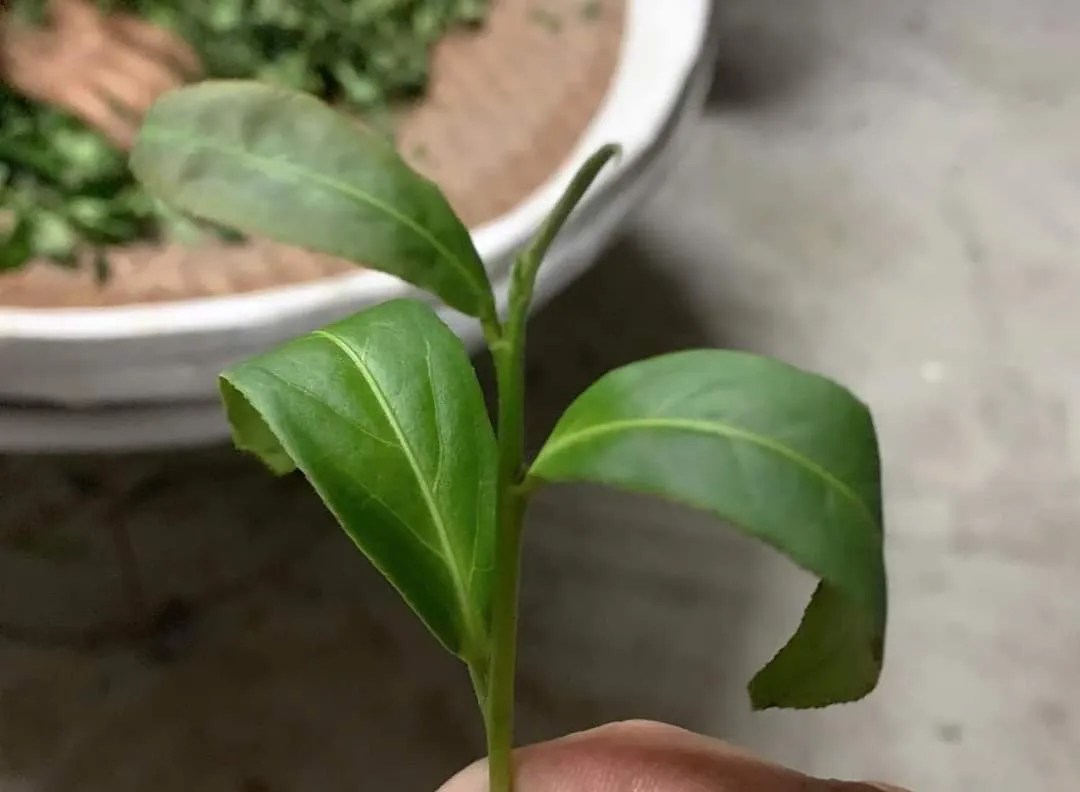
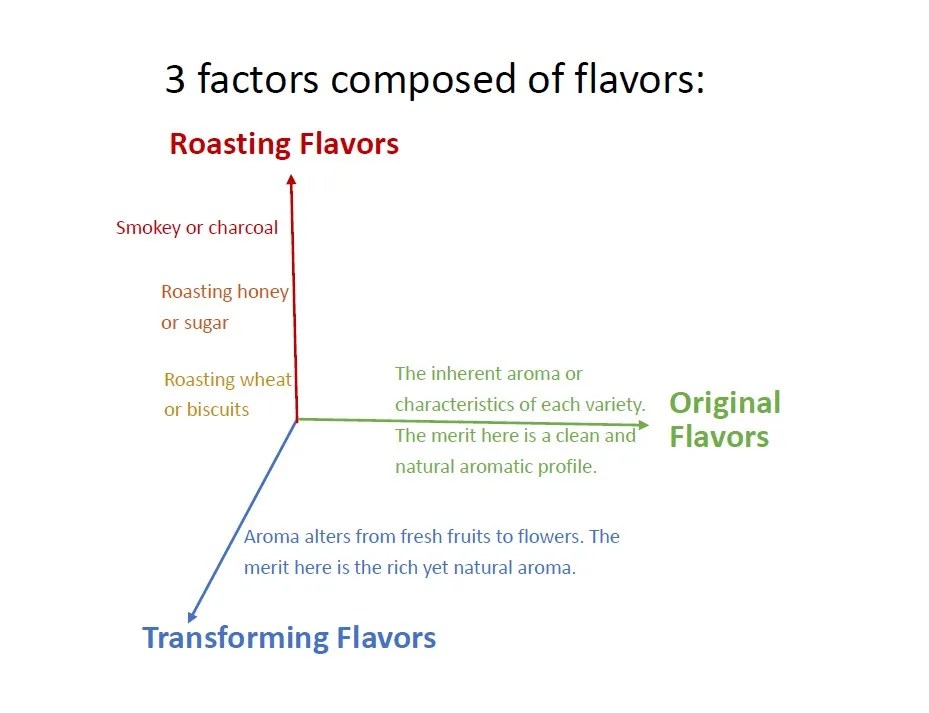
basic Flavor formations:
Flavors of a tea consist of 3 elements: original flavors, flavors after transformation and flavors after roasting.
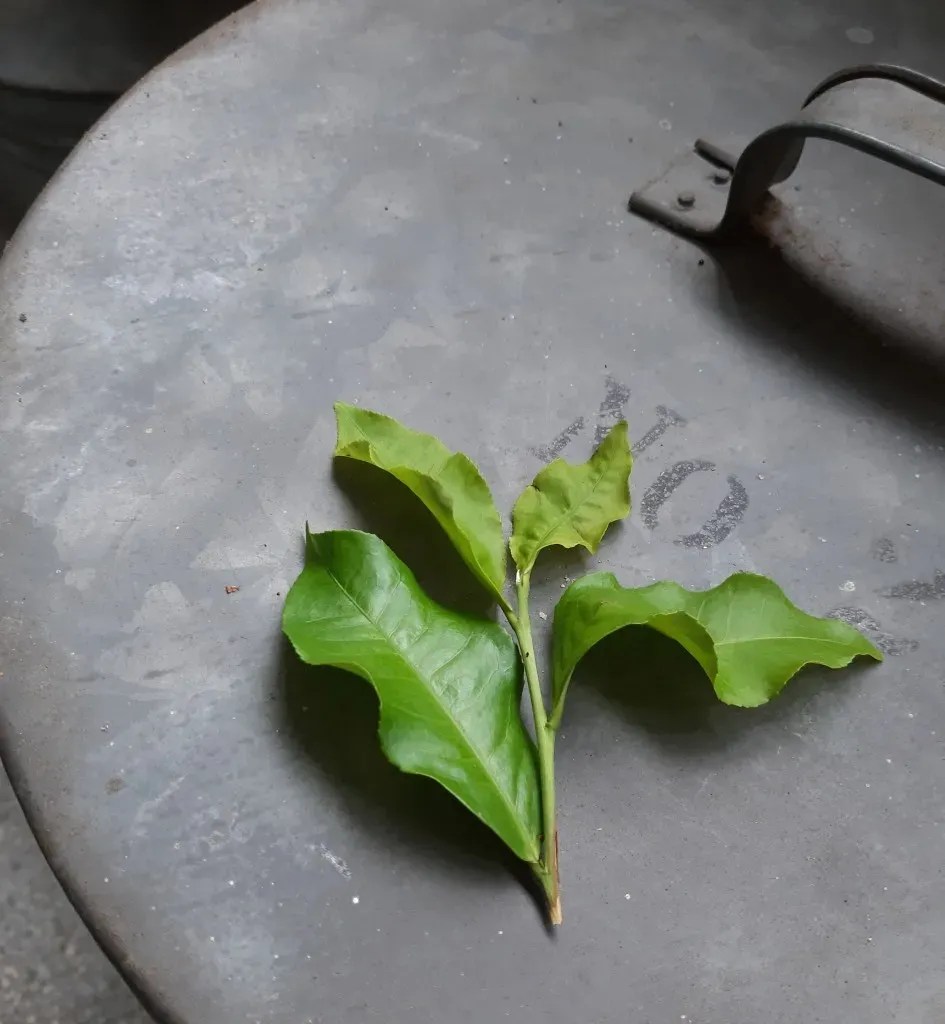
Original flavors:
referring to the inherent aroma or characteristics of each variety. The natural aroma of the plant, which are profoundly influenced by micro-terrain variations and estate management practices. The merit of such flavors is a clean and natural aromatic profile in the liquor.
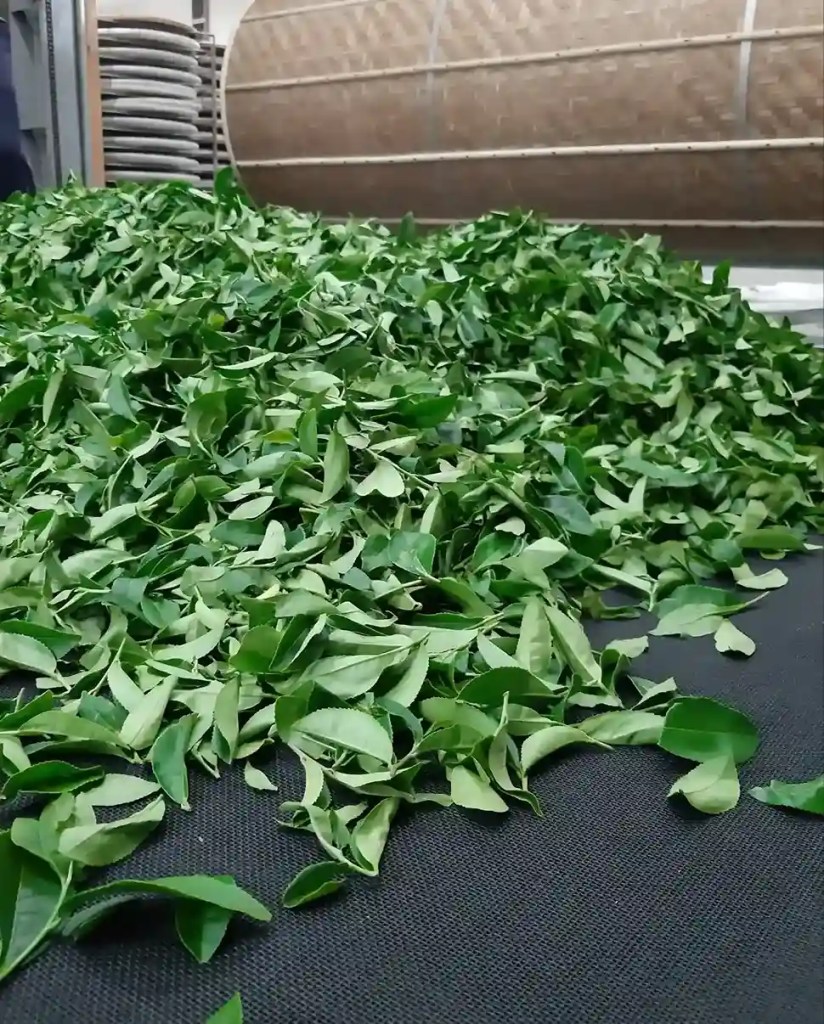
Flavors after transformation:
referring to aromas given by fresh leaves handling processes; aromas alter from fresh herbal notes to crisp floral aromas and citrusy fruit scents, then to rich floral fragrances or tropical fruit aromas. The merit here is the rich yet natural aroma.
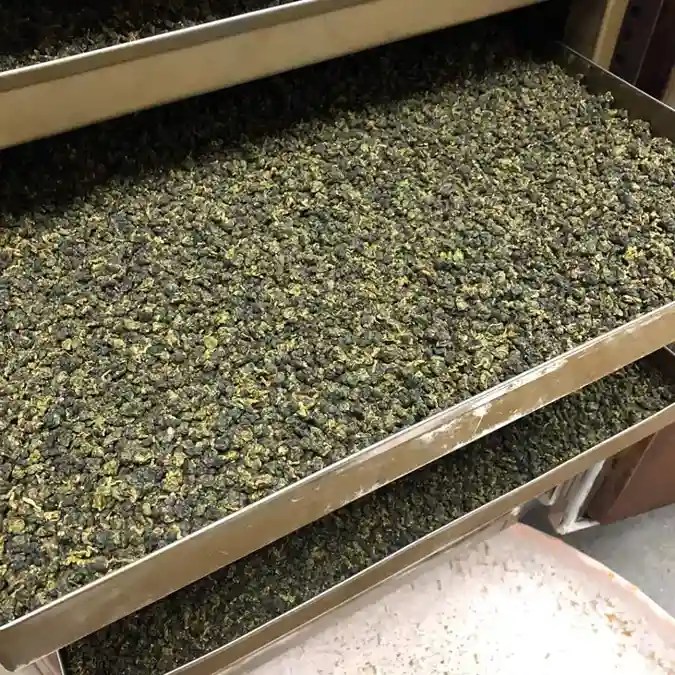
Flavors after roasting:
referring to flavor changing caused by Maillard reaction; aromas alter from baking wheat or biscuits to roasting sugar or honey, then to black coffee like, smokey or charcoal scents. The merit here is the strong and lingering notes as well as the heavy tastes.
flavors shaped during production:
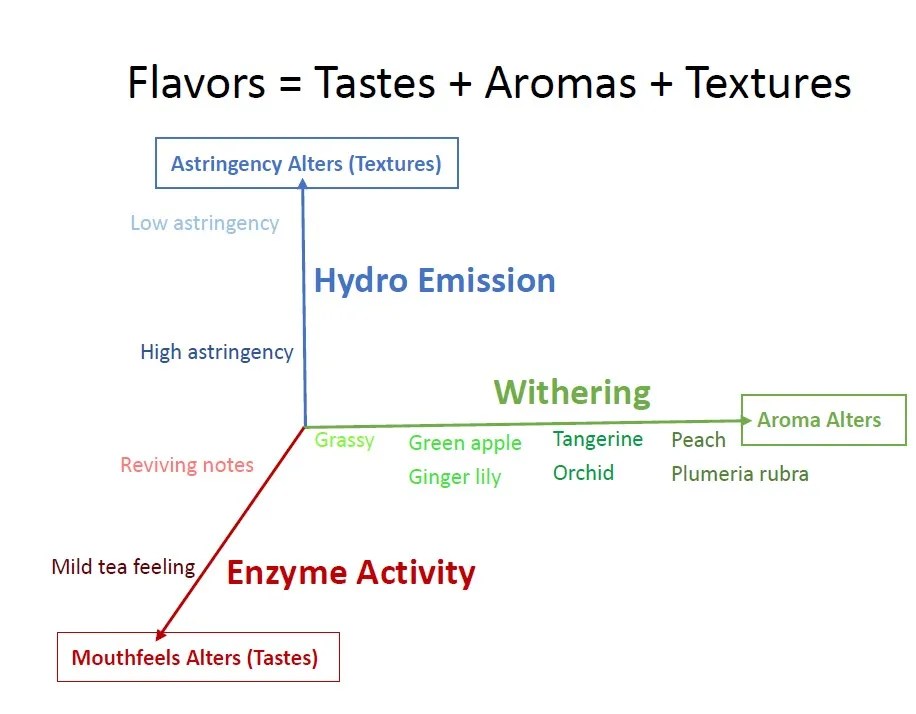
Among all 3 flavors above, the flavor transformation of is composed of three production processes and techniques, they are: withering, enzyme activities and hydro emissions. These 3 factors are the terms translated directly from Taiwanese (a dialect very similar to Fokken); literally speaking, they look similar to each other, but in tea making domain, they do exist and function individually, and the combination of them crafts the aroma, fragrance, tastes and astringency of a tea.
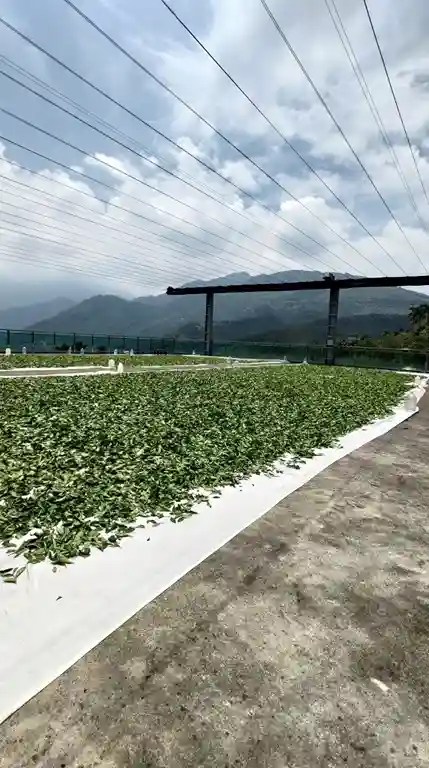
withering:
Withering controls the aromatic changes. The smell of fresh leaves swifts in several phases, starting with grassy notes, transitioning to delicate floral or green apple aromas, then evolving into ripe fruit scents, and finally culminating in rich, complex aroma; these are the aromatic scents and flavors present in the liquor.
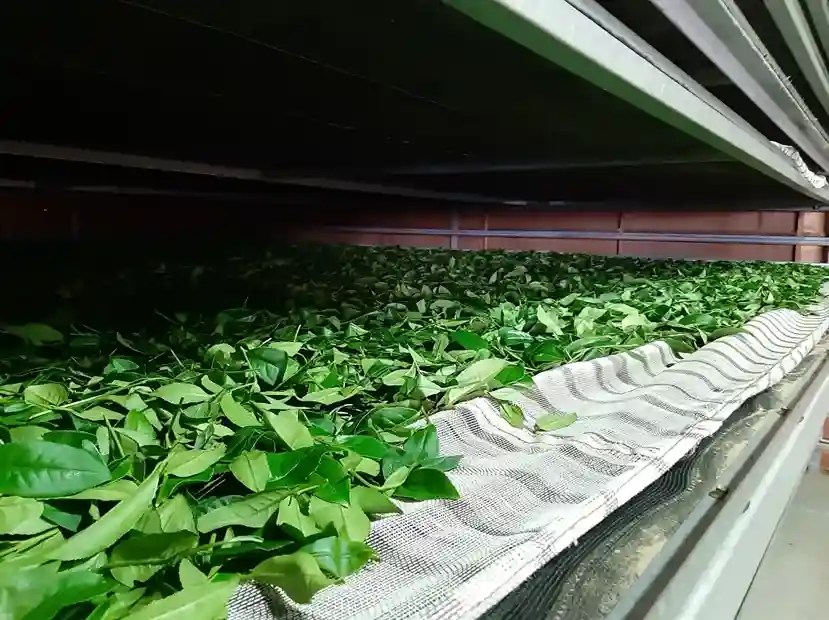
enzyme activity:
Enzyme activities control the swifts of tastes (or say, mouthfeel); reviving notes and umami from the beginning stage to the mild and smooth tastes. In this axis, colors of liquor change form bright light to green then to yellow.
hydro emission:
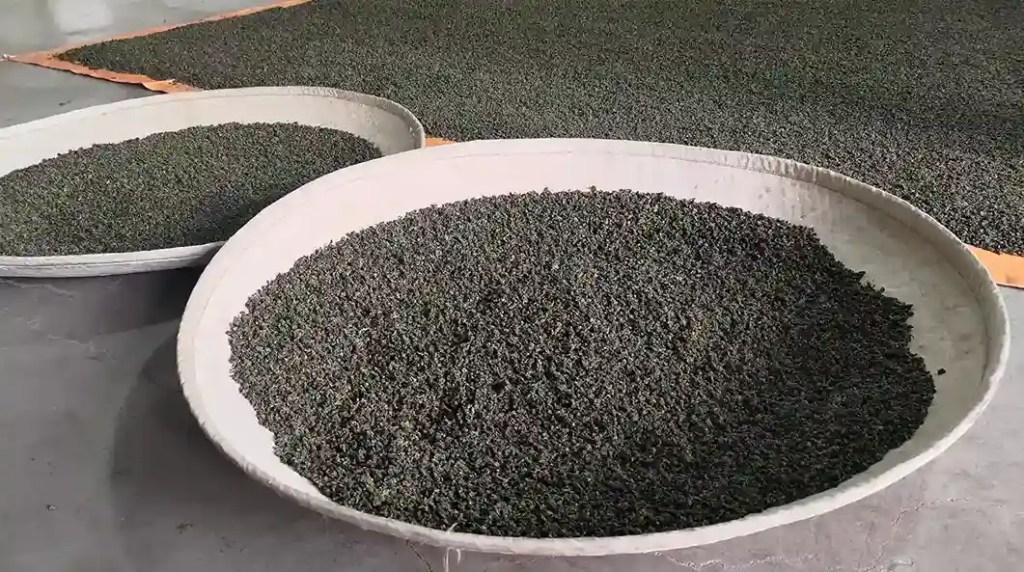
Hydro emission decides the astringency level and the clearness of liquor. A tea with proper and sufficient hydro emission has very low astringency and transparently brightness of liquor. this is also the longest process starting from tea been picked to the end of drying for packing.
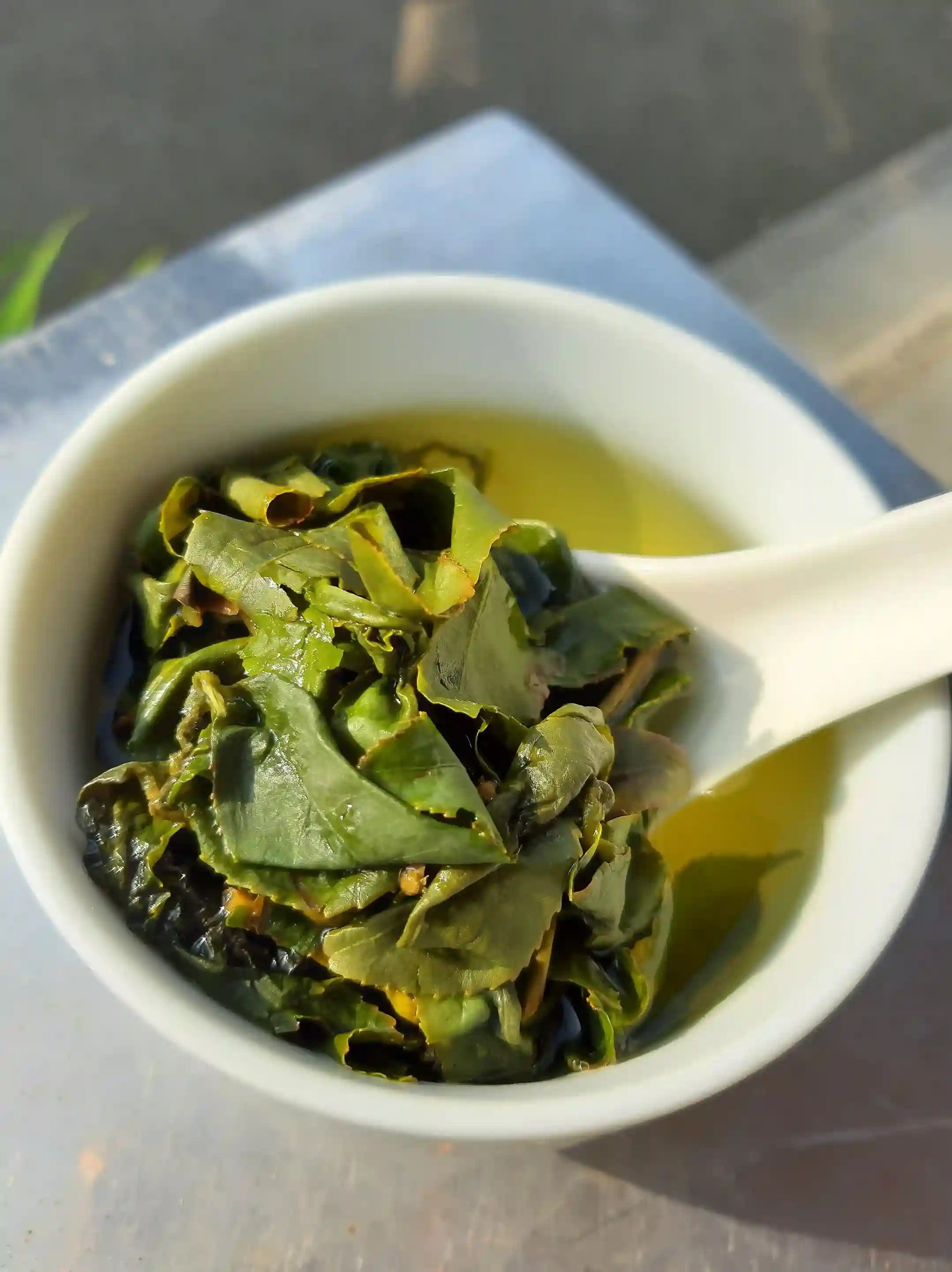
It’s important that all these 3 terms won’t be existed exclusively; every tea has its parameter in X, Y & Z axis. When the moisture emits from leaves and stems, it triggers these 3 mechanisms simultaneously, which is the so-called “oxidation”. But on the other hand, the moisture emission doesn’t guarantee any final position in this quadrant chart and the end point can be very close to origin; the final result only relies on meaningful & skillful management of those 3 aspects during productions.
 Trilliant Industry