
The production process of Taiwan oolong is closely intertwined with nature; we are not only talking about the leaf quality, but more importantly about the whole environment. Tea makers stress on the synchronization of soils, temperatures and personnel, and this echoes to the old tradition of the harmony among earth, heaven and human beings.

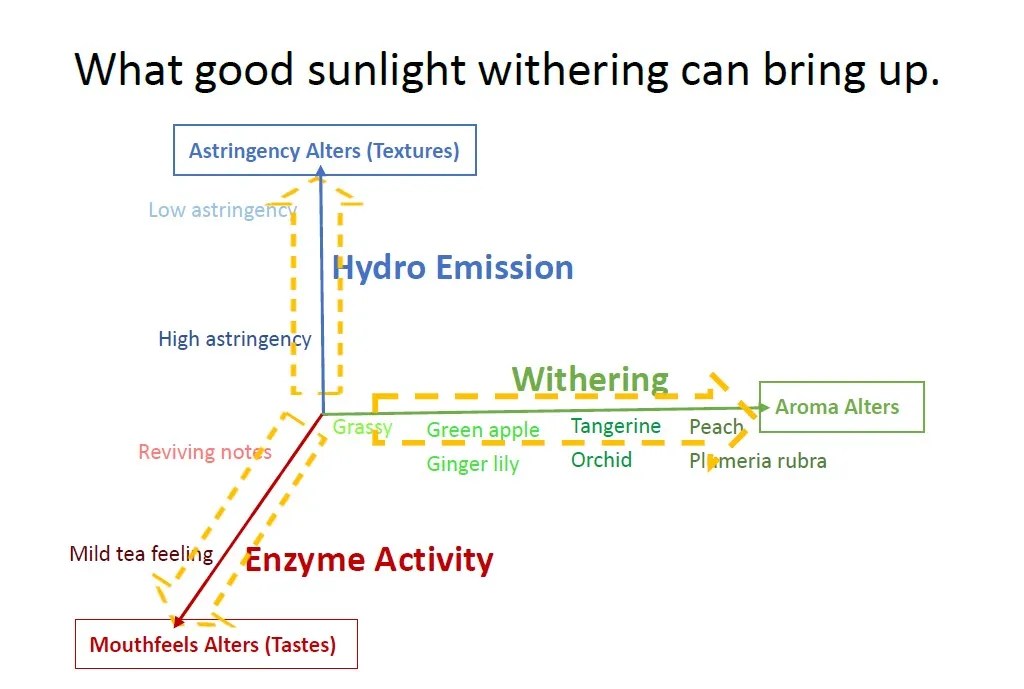
The anchor of the quality lies in withering, which can be divided into two sections: sunlight withering & indoor withering, and the former one is the key. It goes without saying that, in our concepts, good flavors won’t be obtained without sunlight; just considering how the developments of any creatures without sunlight will look like, then we will know the importance. The sunlight provides all necessary conditions to make good teas: moisture emission along with the breeze, withering and enzyme activities are all triggered by sun; such the method also appears in Japanese green tea making processes called ichō. In short, the proper sunlight withering is the best agent to initiate flavor transformation comprehensively to create aromas & mild tastes as long as reducing astringency. (See 3 yellow arrows in the chart)
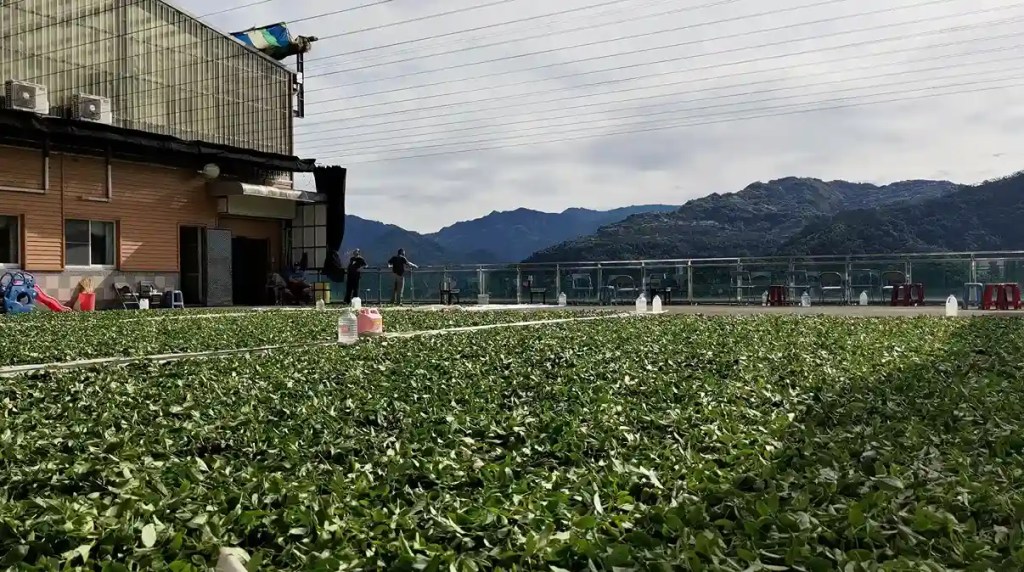
But sunlight is a double-side sword. Without handling it properly, the leaves will be “exhausted” very soon, especially when wind is blowing or the temperature is high. When leaves are exhausted, (1) too much moisture is emitted (2) leaves lose the vitality. The 1st one means insufficient contents of aromatic & soluble substances in leaves can be transformed, and the 2nd one means cells can’t function normally to transform those substances. These two phenomena are two individual situations; they can coexist and will interact with each other, though they are not necessarily appeared at the same time.
 Trilliant Industry