
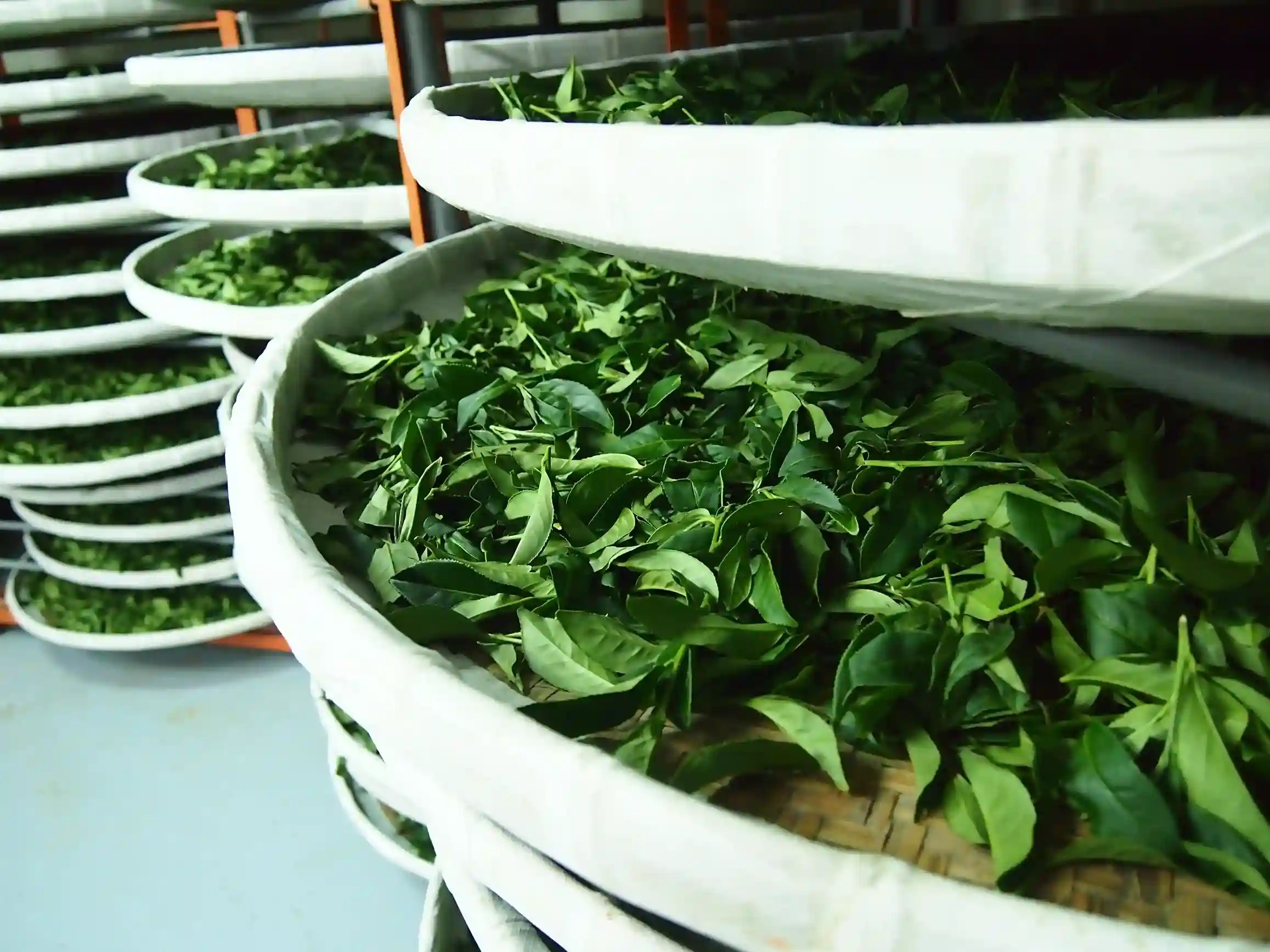
As mentioned in the previous write-up that sunlight withering builds up the foundation of flavors, and this one will talk about the indoor withering carries the mission of raising flavors to the top. This phase takes 10~12 hours and 2~4 times of flipping, depending on (1) what flavors tea makers want to present (2) leaves status. Generally, there are 2 kinds of flipping in this phase: light flipping & strong flipping, and each one has its individual functions and goals to reach.
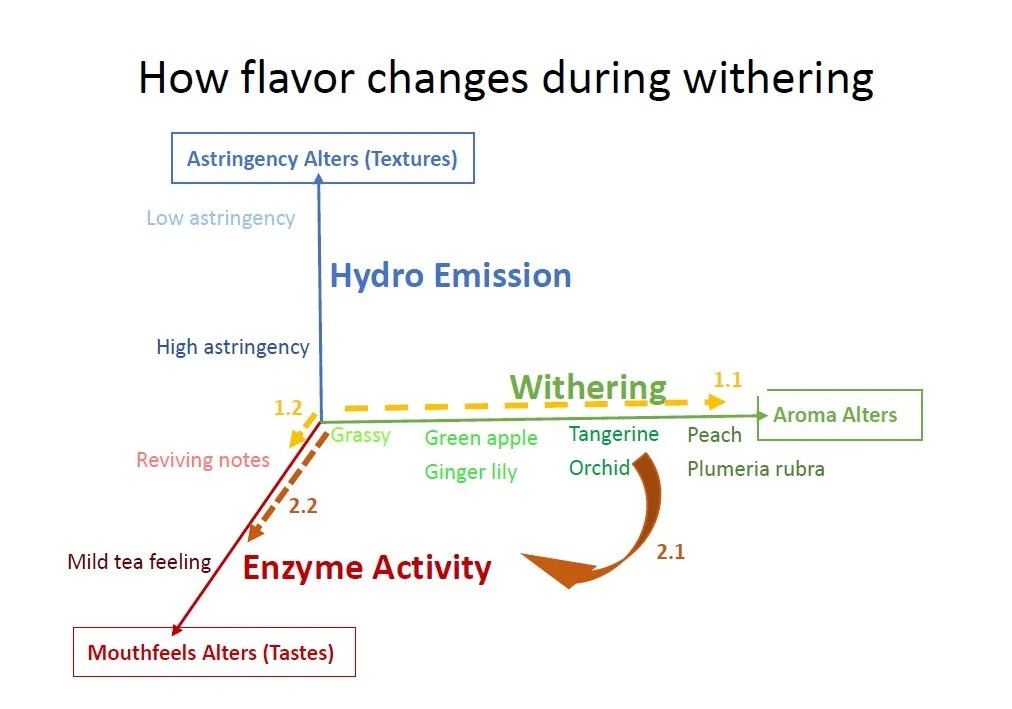
Light flipping: by controlling the moisture emission and the activeness of leaves, we let go the grassy notes and odds within leaves. This is the time when polyphenols get transformed and the aroma is switching to higher level to the right in X axis (Orange Line 1.1). However, leaves have been plucked for many hours and started to lose its physical functions, thus we need to flip them gently to “wake them up” to carry on their jobs. IF everything goes well, the enzyme activity has been started slightly, and the mouthfeel is vividly presented in Y axis (Orange Line 1.2). Flipping is hard to control in terms of timing and strength; too strong or too long time will kill the flavors instantly, but too short or too light won’t generate any results.owe
Strong flipping: After several hours, leaves are performing up to their most, then the strong flipping will be required to pump the flavors to the top manually. During the flipping, cells within leaves are damaged and the temperature of leaves is increasing, thus the enzyme activity is regenerated and fastened by leaps, which means, the 2nd layer of oolong tea flavor is shaped here (Brown Curve 2.1) except the original flavor of Camellia sinensis. After the strong flipping, leaves will be put on shelves again for another several hours before fixation, and the length of this time decides the mouthfeel of a tea. Generally speaking, the longer the time, the milder the mouthfeel will be (Brown Line 2.2). However, as we mentioned quite often before, the genuine Taiwan high mountain oolong focus on presenting teas with both vivid notes and mild mouthfeel; it’s a tough challenge to catch the fine line to have both characters, and it requires sharp sensory awareness and long experiences from tea makers.
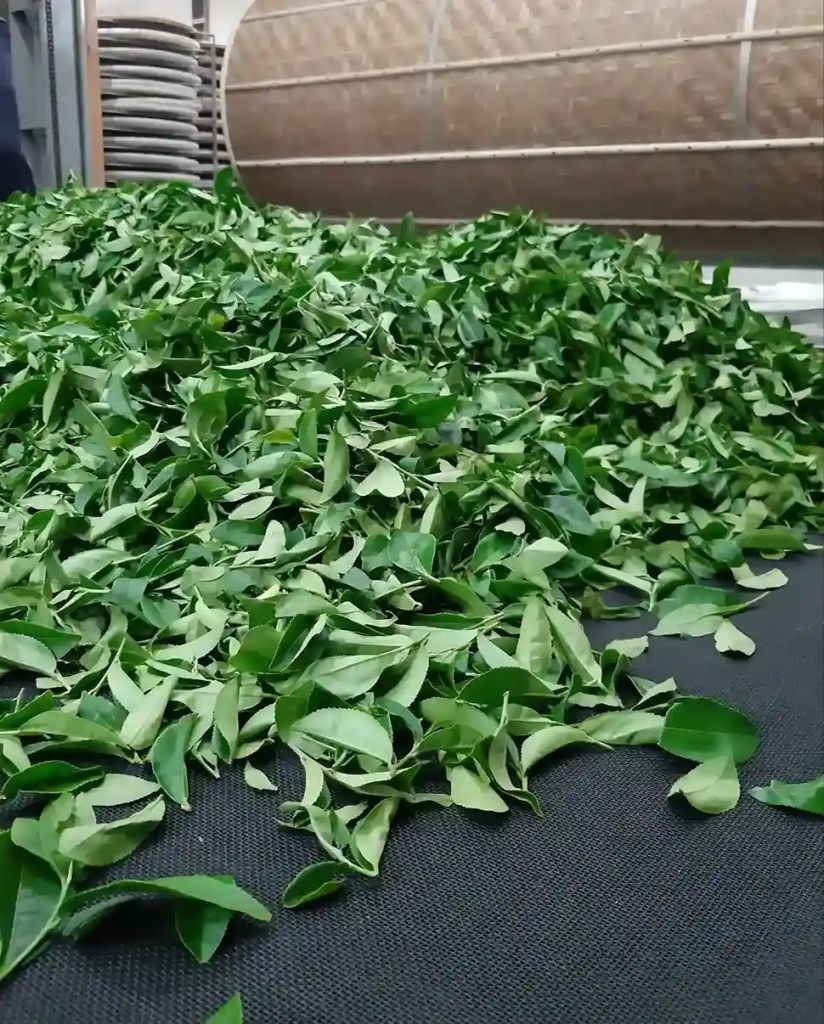
However, leaves status vary in each batch, especially when the extreme weather imposes great threats rapidly nowadays, and it’s not that rare to have leaves contain high moisture within or extremely dried. Thus we alter times, length and strength of lipping quite often to cope with the real situation in order to keep the quality stability. And again, all these changes are made based on the knowledge, on-site experiences and handling skills.
 Trilliant Industry