
Fixation is the phase of “stopping & keeping” when most of the moisture is expelled. Amongst all 7 phases, the first 3 ones carry the mission of crafting and shaping flavors, but starting from fixation on, the main job of each stage is to keep the flavor plus the slight amendment to enhance the quality. The tricky thing is, fixation, alongside with rest 3 stages, can’t increase the quality much, but each one of them can definitely ruin the quality completely; high dedication based on experiences & skills are needed in Taiwan oolong tea making processes, and a small mistake can jeopardize all efforts accumulated for long time.
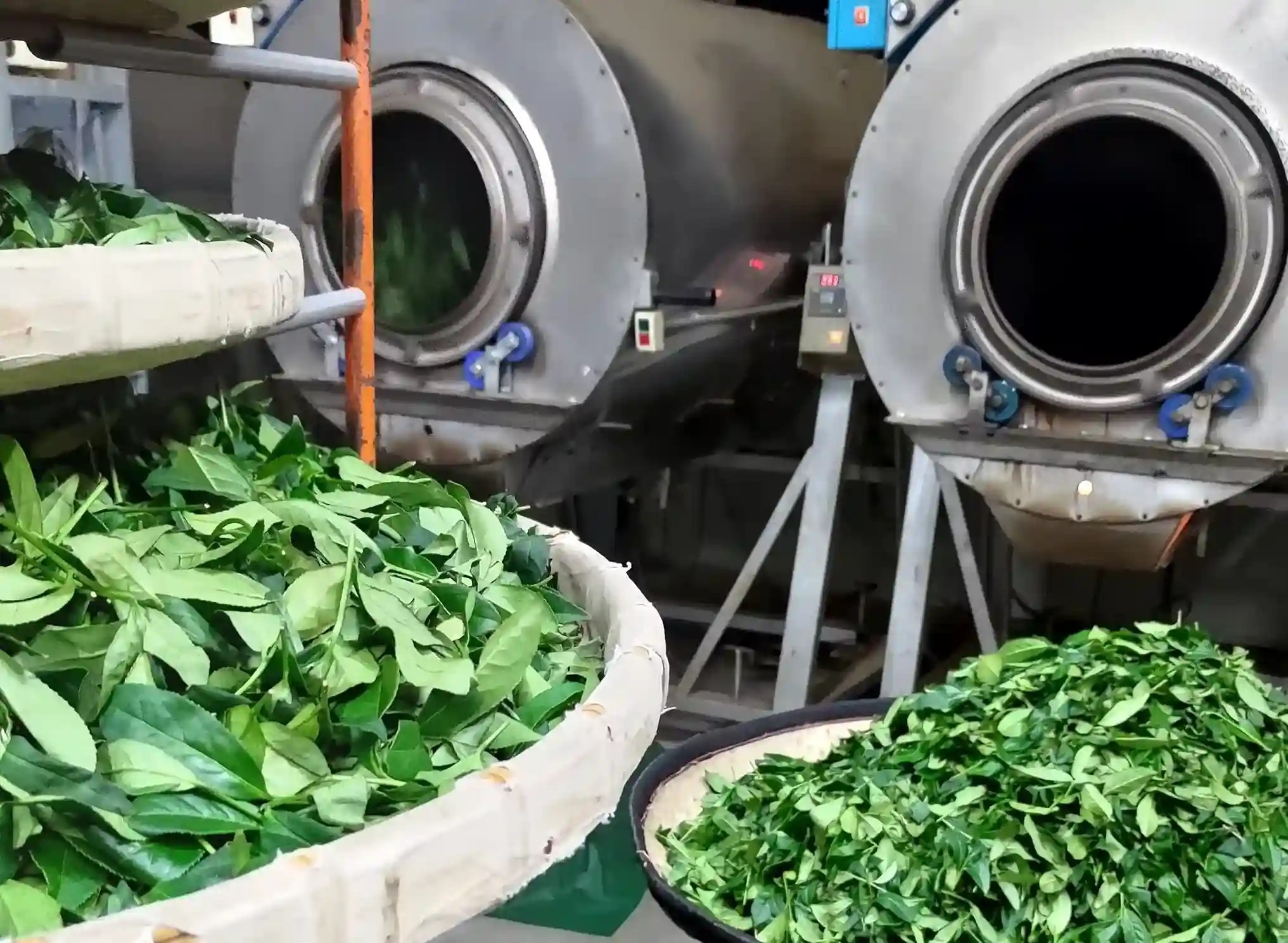
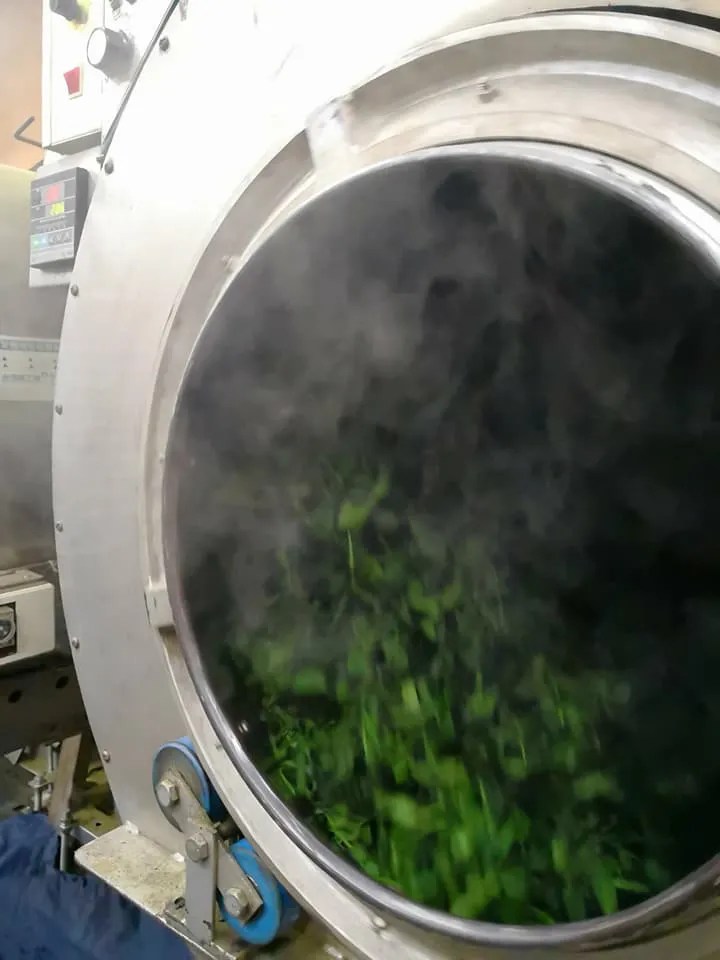
Tea makers fix the leaves at the time when (1) flavors come to the highest point (2) flavors reach the criteria that they want. As explained before, these 2 are different issues: the most precious aspect of TW tea is its adjustable flavors based on clients’ demands. We all know that people’s tastes differ from regions to regions based on their life experience, and such preference decide how we present the final tastes of a tea upon clients’ requests. Fixation is done at high temperature (few hundred Celsius degrees) for long time (several minutes) in a rolling cylinder. There are 3 main changeable parameters here: temperature, time length and rolling speed; they are altered based on conditions of (1) maturity status & consistency of leaves (2) seasons (3) oxidation status of leaves of today (4) flavors wanted.
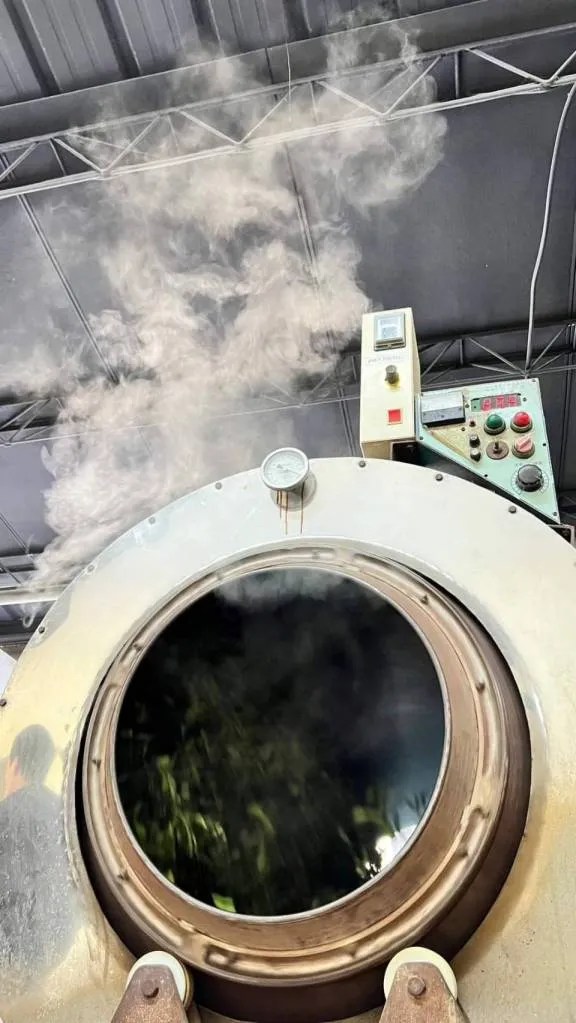
In the days when leaves contain too much moisture, which often happens in raining days, fixation can be done heavily to eliminate the extra moisture; while leaves are too dried during the drought, fixation will be conducted with supportive tools except adjusting those parameters to reduce the moisture emission. When the fixation is done properly, the flavors will be kept without any further flavor transformation happened afterward, and this is what we said by “stopping & keeping”. The fine line is hard to control; too high temperature or too long time will generate the burning tastes, while too low temperature or too short time can’t stop the transformation, and it will lead to the rapid quality dropping when tea is made and packed.
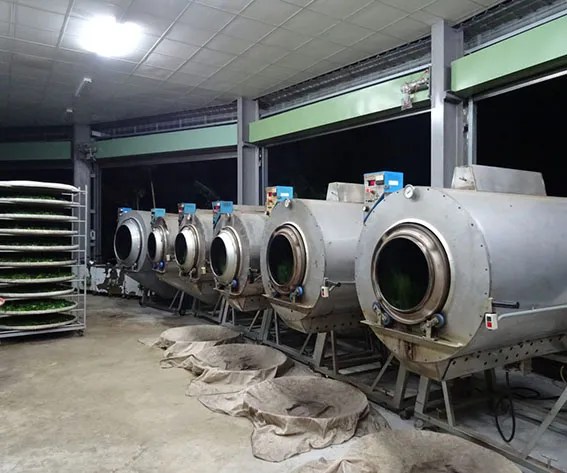
The whole fixation will take several hours (mostly from 3 to 5), thus it’s also essential for team makers to predict and decide the time and sequences of fixation. For example, we have 5 batches of incoming leaves today oxidating on shelves, and each one has individual flavors and transforming status. We have to decide the fixation sequence of these 5 batches in order to have the closest flavors from every one of them. It happened quite often that we have to switch the sequences such as 2-3-1-4-5, 3-1-2-4-5, 1-2-3-4-5, etc. When having unexpected weather like sudden rains which cause the previous 2 withering processes changed dramatically, the fixation sequence will be impacted badly in order to catch up.
 Trilliant Industry