
Kneading in Taiwan tea making domain means much more than its literal meanings; it carries the functions of: creating shapes, presenting mouthfeel, enlarging durability against steeping, outlook altering and flavor altering.
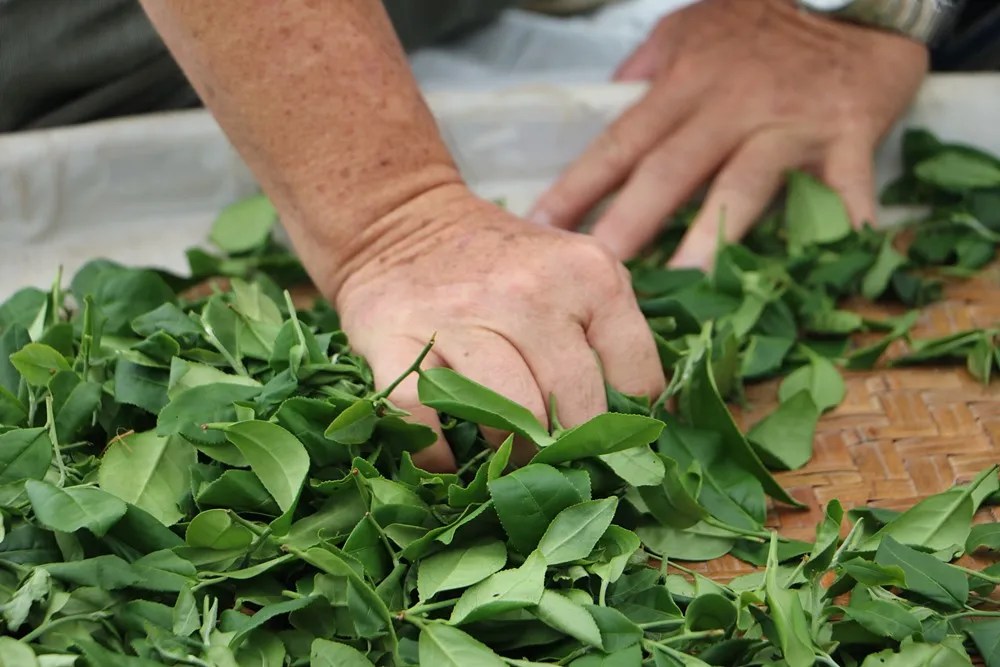
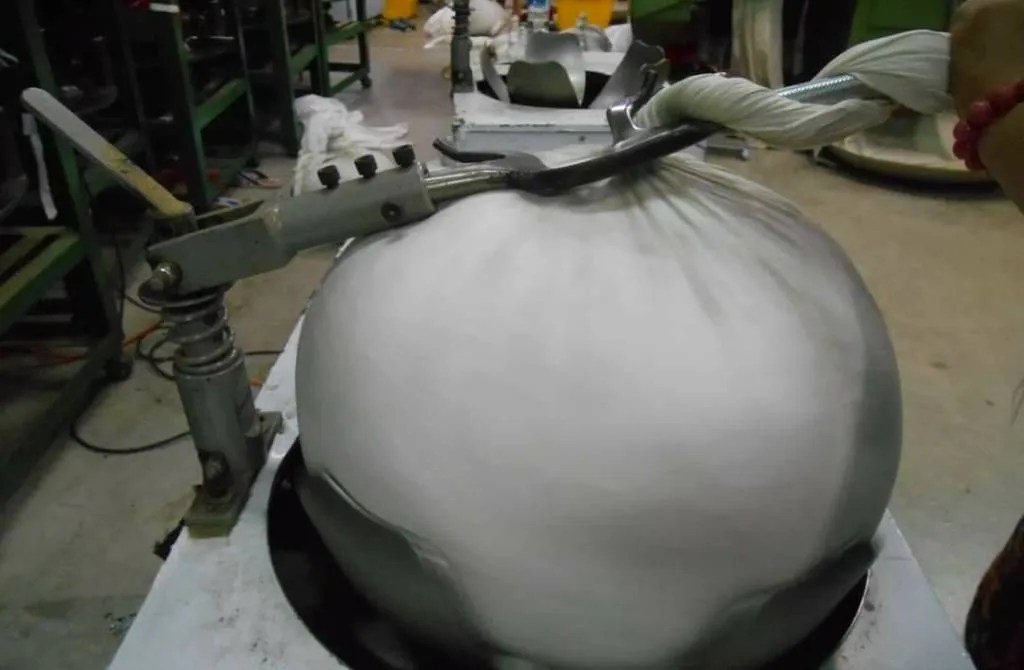
Due to the kneading methods, TW oolong teas are actually easy to be spotted among all teas by professionals by some tiny details. But in general, we have twisted shapes (like BaoZhong, the most historical oolong) and rounded shapes (most often seen ones). These two forms present different flavors. The former one can present flavors rapidly right after the pouring to the cup due to its extensive dimension; this is a good form for those teas with strong floral scents. The rounded one releases flavors slower, thus more suitable for teas with lingering aftertastes. During kneading, the cells in leaves are broken by the pressure and liquids are stained surfaces, thus the round-shaped teas have much stronger flavors and higher durability against steeping because of heavy kneading. Kneading is a double-blade sword, same as to other phases, and must be controlled precisely to catch the fine line; not enough kneading can’t create its exquisite flavors and outlooks, while too much kneading will simply cause high astringency and potential flavor changes (here it can be considered as the quality decrease) afterward due to the “moisture stuck within”.

We can’t control leaves status all the time, and we also don’t need to control it too much; the biggest advantage of TW tea making method is that, we are not controlled by leaves (eg; like strict “one-bud-two-leave” to ensure quality) as long as those leaves are fine to certain level. No surprisingly, all 7 phases are adapted differently to cope with leaves of the day, and kneading also helps in terms of outlook and flavors. There are 2~3 kneading stages by different machines for different purposes, and this is where we can alter. When leaves are more mature than it should be, kneading can make it look fresher. And the best part is about its flavor adjusting. Tea flavors differ in four seasons, and it also crate big price gaps; however, kneading is the tool to amend the seasonal notes and decrease flavor tastes along with other phases, and the end result is the stable quality; although the cost would be higher, the selling price wouldn’t drop and everything pays back.
 Trilliant Industry