
As stated from the very beginning, quality (1) is founded and shaped in withering (2) fixation keeps the highest peak (3) each stage can improve the flavors slightly (4) one single mistake in every phase can screw up everything.
Drying is a very important phase in the 2nd half of the production process; teas are dried in conveying line to undergo high temperature for several times, and the changeable parameters are: amounts of teas piled up, temperature and speed of rotating. Literally, the drying carries the task to expel moisture from leaves to the level of which moisture contain must be less than 5%, and the challenge lies in the flavors and the quality maintenance.

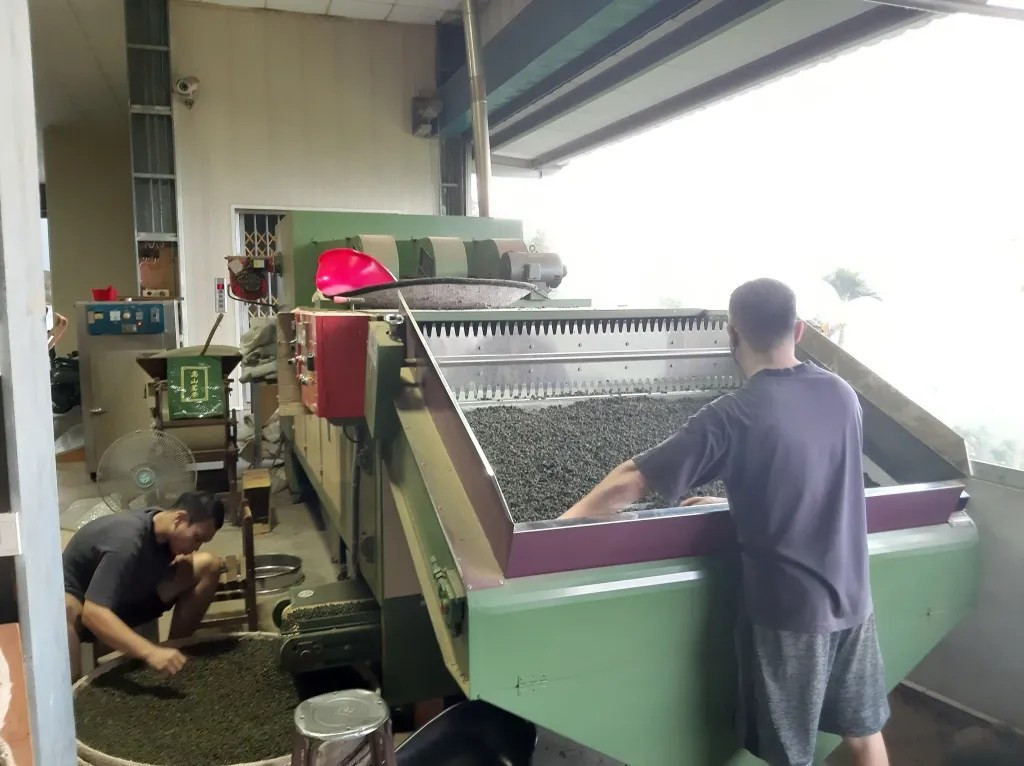
By the heat, the odd compounds will be volatilized and the flavors can be refined when those impurities within leaves are eliminated. But on the other hand, the current flavor is what we want (remember that we fix the “quality” at its highest point); from kneading on, we want these phases to improve the quality, but not changing the flavors, yet it’s easy to imagine that flavors would be changed easily by temperatures. So here comes the operational dilemma. Some examples below:
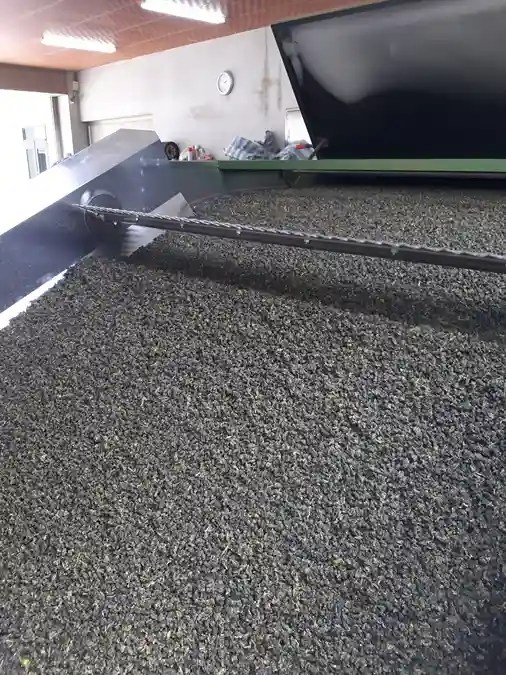
1st scenario: when leaves are rolled in round shape, how can we maintain the same flavor of outer and inner sphere after heating up for hours?
2nd scenario: leaves are picked during the day, and the situation of sunlight in the morning and sudden rain after noontime happened occasionally, thus the moisture contain differs in every lot. So, what to do to handle the drying when leaves come at once?
3rd scenario: drying twisted shape teas requires totally different parameters from rounded shape teas.
4th scenario: how to solve the situation when the tea spheres have two different flavors (occurred from 1st scenario)?
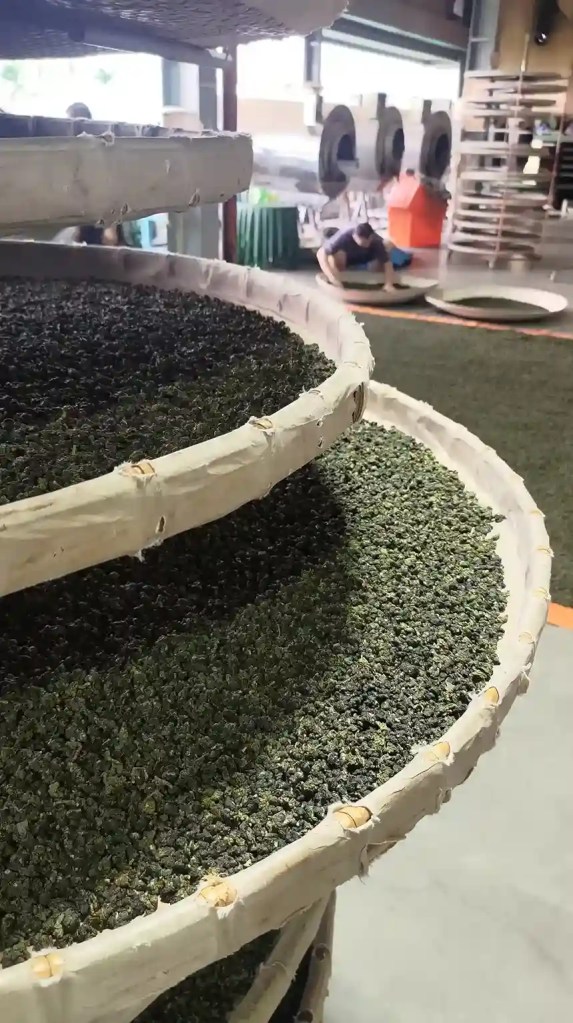
As there are way too many executive details involved and very hard to explain, we can skip solutions for now. However, these scenarios raise up an issue that when we talk about the difference of good teas, specialty teas or artisan teas, for TW tea makers, it definitely not about altitudes, batch quantity, hand-made, etc. Instead, it’s about the end-results of the flavors, which consist of tastes, aroma and textures, and all those 3 aspects are piled up by all these executive know-hows, tea making philosophy, craftsmanship and facilities passed down and evolved for hundred years.
 Trilliant Industry